
 Marshall L. Stocker is an international investor recognized for his research on the relationships between political-economic policy and investment. With more than fifteen years of experience in the asset management industry, his perspective on policy has been sought by ministers, policy institutes, and investors in a wide-range of forums from decision-level policy discussions in Yemen to the syndicated Dennis Miller Radio show.Stocker has opined or been quoted in the Wall Street Journal, USA Today, New York Times, Washington Post, Financial Times, and Regulation Magazine. His seminal research “Equity Returns and Economic Freedom” was published in the Cato Institute’s Cato Journal and has been cited by numerous other academic papers. In his most recent written work, “Don’t Stand Under a Tree When It Rains”, he shares his perspective on life and business during the three years he lived in Egypt amidst the Arab spring.
Stocker earned both a B.S. in engineering and a MBA from Cornell University, where he was awarded the Park Leadership Fellowship. He is also a graduate of Culver Military Academy. Mr. Stocker currently works as a global macro equity strategist and portfolio manager in Boston.
He spoke to the CEC on September 27, 2017 in his talked titled, “Economic Reform and Stock Market Performance”
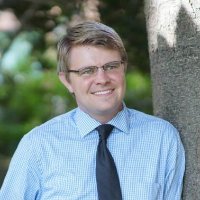 Greg Pulscher joined the Civitas Institute as a development associate in 2015. Since moving to North Carolina from Colorado, Greg established a networking social group in Raleigh devoted to liberty minded individuals, is a contributor to Opportunity Lives and created a podcast called “Free To Brew” tackling the misunderstood and widely criticized world of alcohol using a free market approach.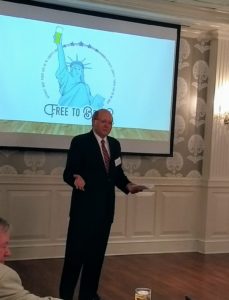


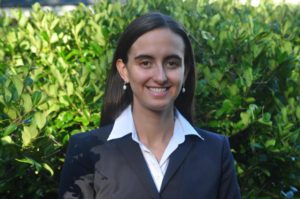 Dr. Beatriz Maldonado is an Assistant Professor of Economics and International Studies at the College of Charleston. Her research in economic development and political economics has appeared in the European Journal of Political Economy, Oxford Development Studies, Applied Economics Letters, and Social Science Quarterly.
 Dr. Todd Nesbit is a Senior Lecturer in Economics and Competitive Markets at The Ohio State University and an Adjunct Scholar at the Mackinac Center for Public Policy. Dr. Nesbit earned dual B.S. degrees in Economics and Mathematics from Capital University in 2001 and then went on to complete his Ph.D. in Economics at West Virginia University in 2005. Dr. Nesbit has authored peer-reviewed professional publications appearing in the Journal of Economic Behavior and Organization, the Southern Economic Journal, and Public Budgeting and Finance, among others. His primary research interest is in public policy issues generally, and excise taxation specifically.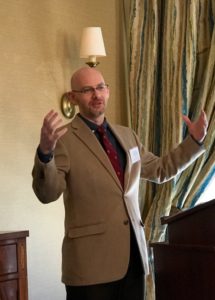
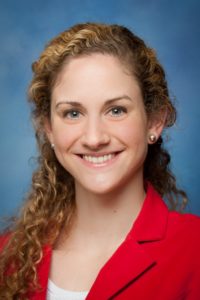 Katherine Restrepo is the Director of Healthcare policy at the John Locke Foundation. Before joining the John Locke Foundation, she interned at the Cato Institute under the direction of Michael Cannon, Director of Health Policy Studies.
  Since moving to the Charleston area in 1999, Brad DeVos has worked for two engineering firms and owned a consulting company. As an electrical designer and sustainability consultant he was involved in over 250 construction projects throughout the Southeast.
 Curtis M. Loftis, Jr. is the incumbent State Treasurer for South Carolina. He was elected State Treasurer in 2010 — winning all 46 counties in his first bid for public office — and was re-elected in 2014. Mr. Loftis owns several businesses and is the founder and sole benefactor of the Saluda Charitable Foundation, a charity that operates in Ukraine, Bolivia and Haiti. He is a resident of West Columbia, SC and is a 1981 graduate of the University of South Carolina.
 erry Ellig is a senior research fellow at the Mercatus Center at George Mason University and a former assistant professor of economics at George Mason University. He specializes in the federal regulatory process, economic regulation, and telecommunications regulation. Previously, Ellig was deputy director and acting director of the Office of Policy Planning at the Federal Trade Commission (FTC). He also served as senior economist for the Joint Economic Committee of the US Congress. Ellig received his MA and PhD in economics from George Mason University and his BA in economics from Xavier University.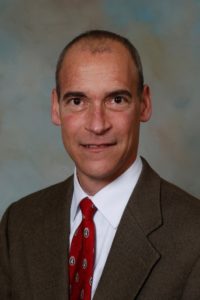
 As senior Fellow and director of Legal Policy at the Manhattan institute, James Copland develops and communicates novel, sound ideas on how to improve America’s civil- and criminal-justice systems. He has testified before Congress as well as state and municipal legislatures; and has authored many policy briefs, book chapters, articles and opinion pieces in a variety of publications, including the Harvard Business Law Review and Yale Journal on Regulation, the Wall Street Journal, National Law Journal, and USA Today. Copland speaks regularly on civil- and criminal-justice issues; has made hundreds of media appearances in such outlets as PBS, Fox News, MSNBC, CNBC, Fox Business, Bloomberg, C-Span, and NPR; and is frequently cited in news articles in the New York Times, Washington Post, The Economist, and Forbes. In 2011 and 2012, he was named to the National Association of Corporate Directors “Directorship 100” list, which designates the individuals most influential over U.S. corporate governance. Prior to joining MI, Copland was a management consultant with McKinsey and Company in New York. Earlier, he was a law clerk for Ralph K. Winter on the U.S. Court of Appeals for the Second Circuit. Copland has been a director of two privately held manufacturing companies since 1997 and has served on many public and nonprofit boards. He holds a J.D. and an M.B.A. from Yale, where he was an Olin Fellow in Law and Economics; an M.Sc. in the politics of the world economy from the London School of Economics; and a B.A. in economics from the University of North Carolina at Chapel Hill, where he was a Morehead Scholar.